Police dogs
Just MercyPolice dogs figure in the courtroom hearing over Walter McMillian’s conviction as more than security: the German shepherd stationed at the entrance evokes a history of racial terror and tests whether Black supporters can remain present in a place where they have come to seek justice. The dog does not attack anyone in the scene, but its presence is enough to drive Mrs. Williams from the courtroom—and, the following day, to give her return its defining words.
The dog at the courtroom entrance
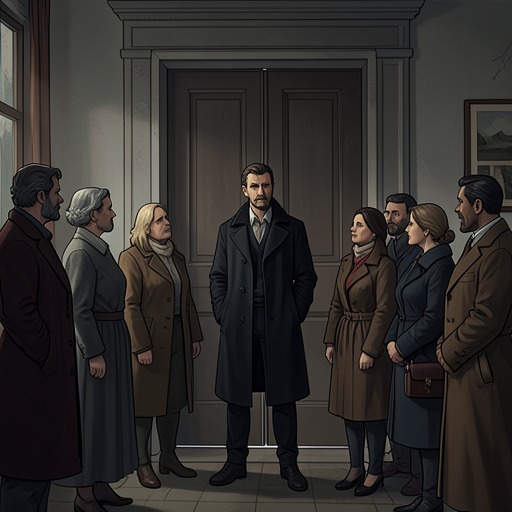
When Bryan Stevenson entered the courtroom, its arrangement had changed. A large metal detector stood just inside the door, and an enormous German shepherd was held back by a police officer. The benches once occupied by McMillian’s supporters were now mostly filled with older white people supporting the Morrisons and the prosecution. McMillian’s family and other supporters had been told they could not enter, although supporters of the State had been admitted. The dog thus stood at a threshold already marked by unequal access.
Mrs. Williams reached that entrance in a hat and scarf, carrying herself with careful dignity. On seeing the dog, she froze; her body trembled, tears ran down her face, and she turned away. The account does not describe the dog attacking or threatening her. Its presence alone, in that setting, was enough to interrupt her attempt to attend the hearing.
Historical memory
Stevenson understood that the dog’s significance exceeded the immediate courtroom scene: in Alabama, police dogs and Black people seeking justice had never mixed well. When he later spoke with Mrs. Williams, she explained the memory behind her reaction. At the Edmund Pettus Bridge in 1965, she had joined a march for voting rights; marchers were beaten, and police dogs were set on them. She had wanted to enter the courtroom, she told him, but seeing the dog had left her unable to move.
The scene connects an instrument of policing in the present to violence remembered from the civil-rights struggle. The dog is not given an individual history or portrayed as acting independently; its force in the narrative comes from what it recalls and from the institutional setting in which it appears. A hearing intended to examine whether McMillian had been wrongly convicted becomes, at the doorway, another encounter with the barriers surrounding Black participation in the pursuit of justice.
Return and narrative significance
The next morning, the metal detector and dog were still there, but no deputy stood at the entrance to keep Black people out. Mrs. Williams returned after a night in which, according to her daughter, she had been so distressed that she did not eat or speak and prayed through the night. On the journey back, she repeated, “Lord, I can’t be scared of no dog, I can’t be scared of no dog.”
At the entrance she continued, “I ain’t scared of no dog, I ain’t scared of no dog.” She walked through the metal detector, faced the dog, and declared, “I ain’t scared of no dog!” Then she entered, sat near the front, and told Stevenson, “Attorney Stevenson, I’m here!” Black people already in the courtroom greeted her with visible joy. The dog remained, but its presence no longer ended her participation: her return turned the threshold that had defeated her the day before into a passage she crossed in public.